Leestijd 10 min
Here you can find all the answers from our advice guides together. Type a word, for example “drogen”, “kinderen” or “penseel”, and the list will adjust immediately. Didn’t find what you were looking for? Try our choice help or see all advice guides.
99 questions
No questions found. Try another word.
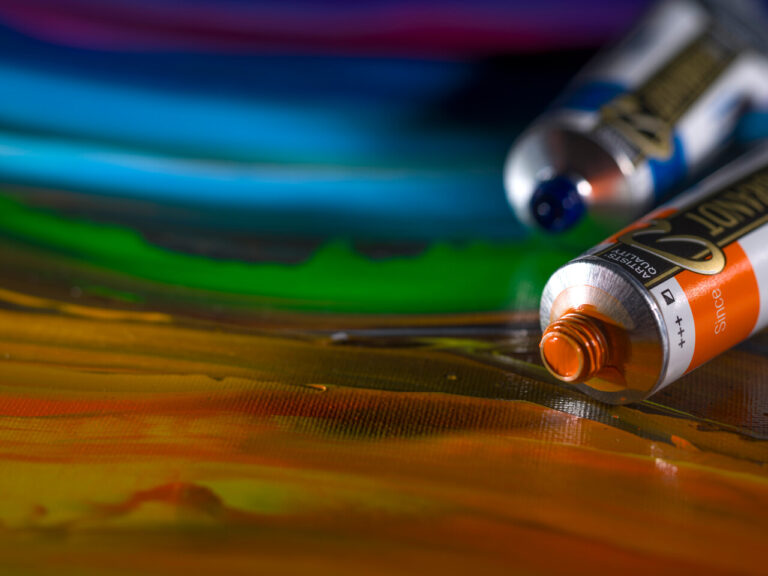
Acrylic paint
What is the difference between study-grade and artist-grade acrylic paint?
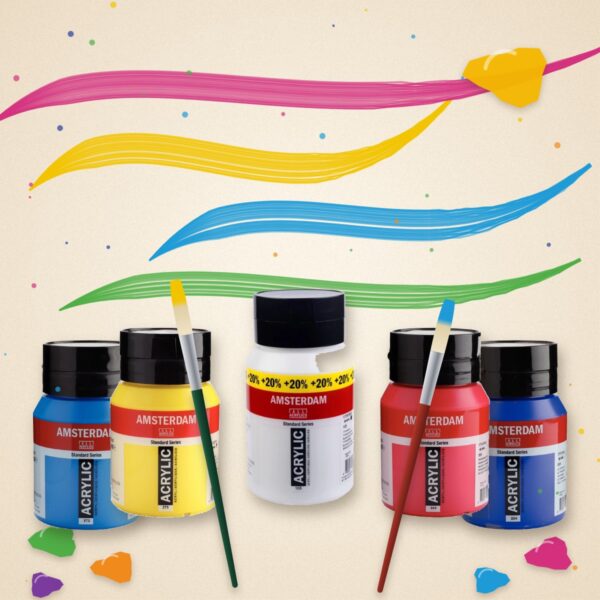
Artistic quality (Amsterdam Expert, Rembrandt, Golden) contains more and purer pigments, is heavier in structure (heavy body) and has a high lightfastness in most colors. Study quality (Art Creation, Amsterdam Standard, Van Gogh) is more affordable and excellent for learning and daily work. In the case of Rembrandt, most colors are at least 100 years lightfast under museum conditions.
Read more: Which acrylic paint should I choose? Art Creation, Amsterdam, Van Gogh, Rembrandt or Golden
Which acrylic paint is best for beginners?
Start with Talens Art Creation or Amsterdam Standard. A set with basic colors (yellow, red, blue, black and white) is enough to learn how to mix colors. Later, switch to Van Gogh or Amsterdam Expert if you notice that you want more color intensity.
Read more: Which acrylic paint should I choose? Art Creation, Amsterdam, Van Gogh, Rembrandt or Golden
Why are Rembrandt acrylic paints sold in tubes of 40 ml and Amsterdam in much larger packaging?
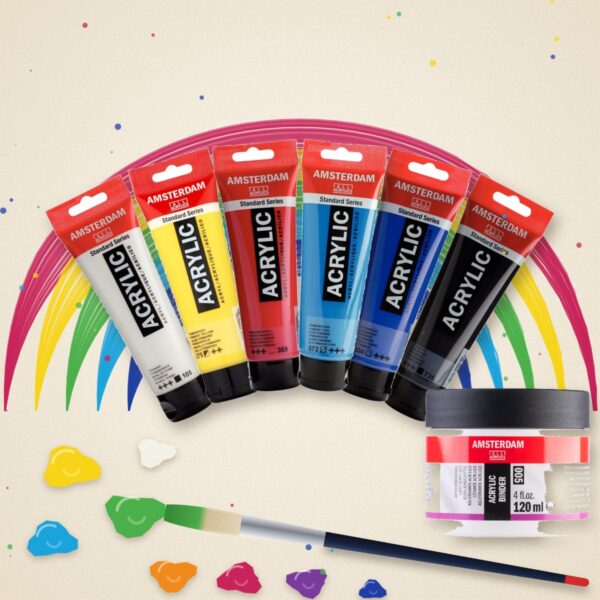
Rembrandt is a professional paint with a lot of pigment, which you use in smaller quantities. Amsterdam is intended for those who use a lot of paint and therefore has large tubes, bottles and sets, including 120 ml, 500 ml and Expert tubes of 150 ml.
Read more: Which acrylic paint should I choose? Art Creation, Amsterdam, Van Gogh, Rembrandt or Golden
What is the difference between the Amsterdam Standard Series and the Amsterdam Expert Series?
Standard Series is a versatile, affordable acrylic paint for beginners, schools and large-scale work. Expert Series is a professional heavy-body paint with satin finish, intended for visible brushstrokes and texture, with 70 colors.
Read more: Which acrylic paint should I choose? Art Creation, Amsterdam, Van Gogh, Rembrandt or Golden
Can I use the brands interchangeably?
Yes. Acrylic paint is water-based and can be mixed between brands. Please note that the color, coverage, and thickness vary per line.
Read more: Which acrylic paint should I choose? Art Creation, Amsterdam, Van Gogh, Rembrandt or Golden
Do I need gesso?
On ready-made canvas not always, but on panel, wood and paper gesso gives grip and a smooth surface. You can find gesso at Amsterdam and Golden.
Read more: Which acrylic paint should I choose? Art Creation, Amsterdam, Van Gogh, Rembrandt or Golden
What is the difference between Heavy Body and OPEN?
Heavy Body is thick, buttery paint. Golden OPEN dries much slower, allowing you to mix and work on it for longer.
Read more: Which acrylic paint should I choose? Art Creation, Amsterdam, Van Gogh, Rembrandt or Golden
How quickly does acrylic paint dry?
That depends on the thickness and environment. Thin layers often dry within an hour when touched. Thick layers and slow-drying paints like OPEN take longer to dry.
Read more: Which acrylic paint should I choose? Art Creation, Amsterdam, Van Gogh, Rembrandt or Golden
Can I thin out acrylic paint?
Yes, with water, or with a medium if you want to make the paint more transparent or liquid without losing its binding power.
Read more: Which acrylic paint should I choose? Art Creation, Amsterdam, Van Gogh, Rembrandt or Golden
How do I clean my tools?
Rinse brushes with water and soap before the paint dries. Dried acrylic paint is difficult to remove.
Read more: Which acrylic paint should I choose? Art Creation, Amsterdam, Van Gogh, Rembrandt or Golden

Oil paint or acrylic paint
Can I paint oil paint over acrylic paint?
Yes, once the acrylic paint has completely dried. The opposite does not work: acrylic paint does not adhere well to oil paint.
Read more: Oil paint or acrylic paint?
How long does it take for oil paint to dry?
This varies per color and layer thickness. Allow up to several days to fully dry. Thin layers dry faster.
Read more: Oil paint or acrylic paint?
Which brushes do I use?
For both types of paint, there are brushes with firm bristles. For oil paint, you often work with boar bristles or synthetic hair. Read our guide Which brushes do I need?.
Read more: Oil paint or acrylic paint?
What kind of surface do I need?
For oil paint, a prepared surface is needed, for example gesso. Acrylic paint can also be used on paper.
Read more: Oil paint or acrylic paint?
Is oil paint toxic?
It depends on the pigments and the solvent. Read the package and ensure good ventilation.
Read more: Oil paint or acrylic paint?
What is water-soluble oil paint?
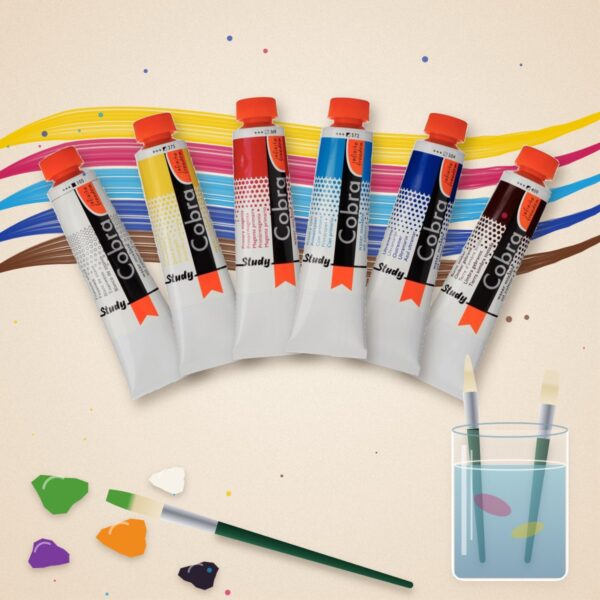
This is oil paint that you can dilute with water and clean with, like Cobra from Royal Talens. You don't need turpentine.
Read more: Oil paint or acrylic paint?
Which is cheaper, oil or acrylic?
That depends on the line. Art Creation and Amsterdam Standard (acrylic) and Van Gogh (oil) are cheaper, Rembrandt and Golden are more expensive. Large packages are cheaper per ml.
Read more: Oil paint or acrylic paint?
Can I mix oil and acrylic paint?
Do not mix them together. Oil over dry acrylic can, conversely, not be used.
Read more: Oil paint or acrylic paint?
How long do the colors last after drying?
That depends on the pigment and the lightfastness. In the case of Rembrandt, most of the colors are at least 100 years lightfast under museum conditions.
Read more: Oil paint or acrylic paint?
Which paint dries the fastest?
Acrylic paint. Oil paint dries in days to weeks, depending on the thickness of the layer and the color.
Read more: Oil paint or acrylic paint?
Is acrylic paint better for children?
Water-based acrylic paint is easier to clean. Read the packaging and take precautions.
Read more: Oil paint or acrylic paint?

Watercolor paint for beginners
What is the difference between watercolor paint and Ecoline?
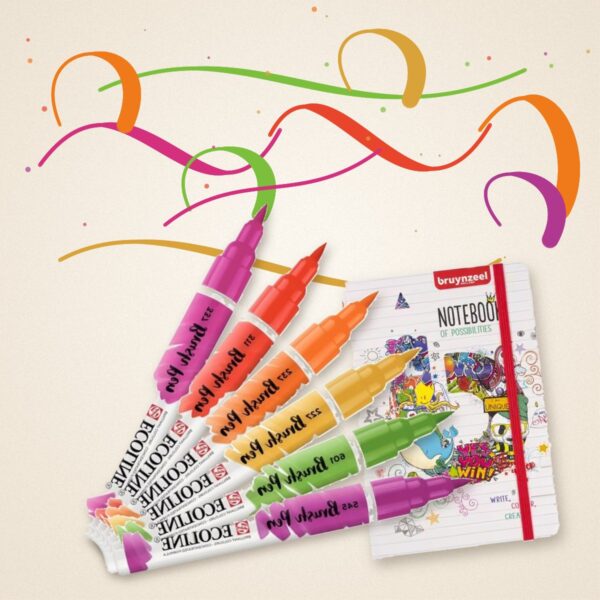
Ecoline is liquid watercolor paint and ink in bottles and brush pens. It is very vibrant and lends itself well to illustration and hand lettering. Watercolor paint in tubes or small bottles is more suitable for extensive mixing. See it Ecoline range.
Read more: Watercolor paint for beginners
What colors do I need a minimum of?
A yellow, a red and a blue give you all the basics. With white paper as the lightest color, you don't need to buy white. If you want to refine your colors later, you'll end up with sets with more shades.
Read more: Watercolor paint for beginners
Do I have to glue the paper?
With many waters, it helps to secure the edges with masking tape. An aquarelle block is glued to four sides, so that is not necessary.
Read more: Watercolor paint for beginners
Can you improve watercolor if it goes wrong?
Partly. With a clean, damp paintbrush and a cloth, you can still lift up the paint as long as it’s still wet. Dried watercolor can sometimes be touched up, but not completely wiped out.
Read more: Watercolor paint for beginners
Which paint is best suited for children?
A set of napkins is easy to use. Check out Bruynzeel Kids and Van Gogh pocketboxes for a compact starter set.
Read more: Watercolor paint for beginners
What is wet-in-wet painting?
You paint on wet paper, so the colors blend together. Handy for airbrushed effects and soft transitions.
Read more: Watercolor paint for beginners
How do I make a color lighter?
With more water. In watercolor you don't use white; the paper is your white.
Read more: Watercolor paint for beginners
What is glacering?
You apply thin transparent layers over a dry layer, so that the colors become deeper.
Read more: Watercolor paint for beginners
Rembrandt in tubes of napkins?
Tubes provide concentrated paint for large areas. Sponges are handy for on-the-go use. Rembrandt has both.
Read more: Watercolor paint for beginners
How do I store watercolor paint?
Let the sachets dry properly before closing the box and keep the tubes tightly closed.
Read more: Watercolor paint for beginners
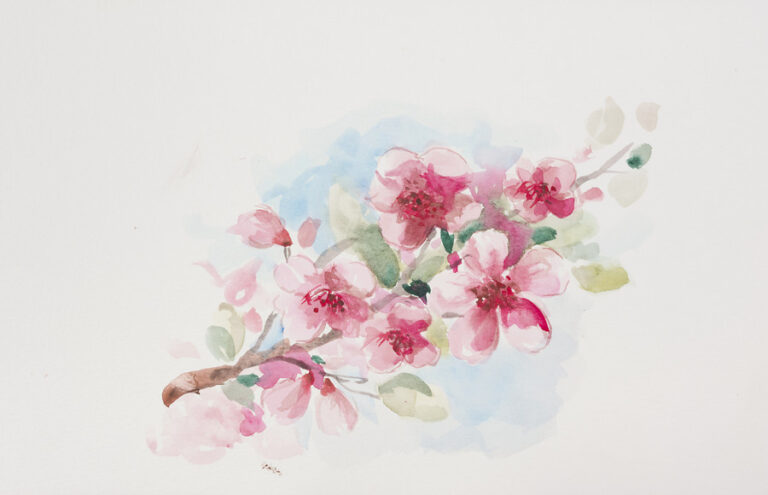
Paper
What does 240 grams mean for watercolor paper?
That is the weight per square meter. Paper weighing 200 grams or more is suitable for most watercolor works. The heavier it is, the less it will ripple.
Read more: Which paper should I choose for watercolor, sketches, and markers?
What is the difference between a block and a sketchbook?
One block has sheets that are glued together at the edges, so the paper stays tight when wet. A sketch book is convenient to carry and for dry techniques.
Read more: Which paper should I choose for watercolor, sketches, and markers?
Why does my marker go through the paper?
Thin paper is not made for alcohol or ink markers. Choose marker or drawing paper that is intended for that purpose.
Read more: Which paper should I choose for watercolor, sketches, and markers?
Can I use watercolor paint on drawing paper?
That can be for a quick sketch with little water, but the paper tends to get wavy quickly. For real watercolor, watercolor paper is better.
Read more: Which paper should I choose for watercolor, sketches, and markers?
What is the difference between coarse and fine watercolor paper?
Raw paper has a distinct grain and allows paint to flow beautifully. Fine paper is smoother and provides more detail.
Read more: Which paper should I choose for watercolor, sketches, and markers?
Can I use acrylic paint on paper?
Yes, preferably on acrylic paper or heavy paper. Thin paper can ripple.
Read more: Which paper should I choose for watercolor, sketches, and markers?
What is acid-free paper?
Acid-free paper that doesn't yellow as quickly. Important for work that you want to keep.
Read more: Which paper should I choose for watercolor, sketches, and markers?
Which paper fits with Ecoline?
Use watercolor paper, for example the Ecoline watercolor paper block of 290 g/m², which Royal Talens says is suitable for liquid water colors, Brush Pens and Duotip markers.
Read more: Which paper should I choose for watercolor, sketches, and markers?
Do I need to glue the watercolor paper?
With a lot of water, it helps to stick the paper on a shelf so that it stays flat. A block does that for you.
Read more: Which paper should I choose for watercolor, sketches, and markers?
What is cold-pressed paper?
Cold-pressed paper has a fine to medium-grained texture. It is the most commonly used watercolor paper. The Van Gogh watercolor paper is cold-pressed and has a fine texture.
Read more: Which paper should I choose for watercolor, sketches, and markers?
What is the difference between cotton and cellulose?
Cotton paper holds more water and is more robust, like Rembrandt’s 100% cotton. Cellulose paper, like Van Gogh’s, is cheaper and suitable for practicing with.
Read more: Which paper should I choose for watercolor, sketches, and markers?
Why did Van Gogh also use black watercolor paper?
The black paper is intended for interference (pearl) and metallic watercolor paint, which works well on a dark background.
Read more: Which paper should I choose for watercolor, sketches, and markers?
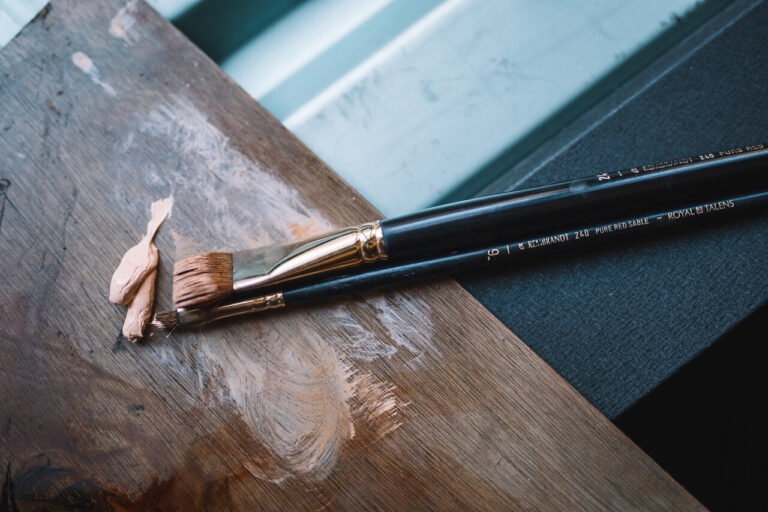
Brushes
Which brushes do I need at least?
A medium-sized round brush and a flat brush. Later add a fine brush for details.
Read more: Which brushes do I need?
Can I use the same brushes for oil and acrylic paint?
You can, but don't mix them together. Oil residues and acrylic paint don't mix well. Use separate brushes for each type of paint.
Read more: Which brushes do I need?
How do I care for my brushes?
Rinse them immediately after use, shape the hair with your fingers and let them dry lying down or with the hair up. Do not leave them in water.
Read more: Which brushes do I need?
What do the numbers on brushes mean?
The number indicates the size. The higher the number, the thicker the brush. The exact width varies per brand and series.
Read more: Which brushes do I need?
Is a set useful?
For beginners, though: you get multiple sizes at once and can discover which one you use the most.
Read more: Which brushes do I need?
What is the difference between synthetic hair and natural hair?
Natural hair holds a lot of water and is supple, especially popular in watercolor painting. Synthetic hair is more resilient, lasts longer, and is cheaper. For acrylic, synthetic hair is usually the best choice.
Read more: Which brushes do I need?
What size brush do I need?
A medium-sized round brush for details and flat areas, and a flat brush for large areas. For large canvases, wide flat brushes are helpful.
Read more: Which brushes do I need?
Can I use an acrylic brush for watercolor as well?
That is possible, but acrylic paintbrushes are sturdy and hold little water. For watercolor, a soft brush is more comfortable.
Read more: Which brushes do I need?
How do I clean oil paint brushes?
Wipe off most of the paint with a cloth and then clean with turpentine or a fragrance-free alternative, and wash with soap. At Cobra, you only use water and soap.
Read more: Which brushes do I need?
How do I store my brushes?
Let them dry with their hair up or lying down and store them with their hair free from pressure.
Read more: Which brushes do I need?
When should I replace a brush?
If the hair no longer regrows or the tip is split.
Read more: Which brushes do I need?
What sizes are available for the Rembrandt brushes?
Series 290 (flat) is available in numbers 4 to 24, and Series 291 (round) in numbers 4 to 12.
Read more: Which brushes do I need?
Why is synthetic hair good for oil and acrylic?
It is strong and resilient, and holds thick paint. It also remains in shape when cleaned with water or solvent.
Read more: Which brushes do I need?
Oil paint
What is the difference between Van Gogh and Rembrandt's oil paintings?
Van Gogh is a buttery oil paint with strong color intensity, suitable for beginners, students, and active artists (approximately 66 colors). Rembrandt is an extra-fine artist's paint with a high pigment load, 120 colors, and a lightfastness of at least 100 years under museum conditions.
Read more: Which oil paint should I choose? Van Gogh, Rembrandt, Cobra or Art Creation
What is Cobra oil paint?
Cobra is water-soluble oil paint. You thin it and clean it with water instead of turpentine. When mixed with regular oil paint in the ratio of 4:1, the mixture remains water-dilutable.
Read more: Which oil paint should I choose? Van Gogh, Rembrandt, Cobra or Art Creation
What is the difference between Cobra Artist and Cobra Study?
Cobra Artist is the professional line with 100 colors, finer-ground pigments and the highest lightfastness. Cobra Study is the economical variant with 40 colors and less finely ground pigments.
Read more: Which oil paint should I choose? Van Gogh, Rembrandt, Cobra or Art Creation
Why are there large tubes of Van Gogh and Cobra Study?
For those who use a lot of paint, for example at school or on large canvases, there are tubes of 150 and 200 ml, and at Van Gogh there is also a 500 ml jar. Rembrandt and Cobra Artist are available in 40 ml and 150 ml.
Read more: Which oil paint should I choose? Van Gogh, Rembrandt, Cobra or Art Creation
Which oil paint is best for beginners?
Van Gogh or Cobra Study. Choose Cobra if you want to work without turpentine, for example at home or in a small space. Art Creation is an affordable entry-level product for school and hobby use.
Read more: Which oil paint should I choose? Van Gogh, Rembrandt, Cobra or Art Creation
What is the difference between linseed oil and safflower oil in white paint?
Linseed oil dries faster but yellows slightly more. Safflower oil yellows less and is suitable for light colors and top coats, but dries more slowly.
Read more: Which oil paint should I choose? Van Gogh, Rembrandt, Cobra or Art Creation
Can I mix oil paint with acrylic paint?
Don't mix them together; you can still paint with oil paint over dry acrylic paint. Conversely, acrylic paint doesn't adhere well to an oil-based layer.
Read more: Which oil paint should I choose? Van Gogh, Rembrandt, Cobra or Art Creation
How long does it take for oil paint to dry?
Touch-drying often takes several days, fully dried for weeks to months. Thin layers and linseed oil dry faster.
Read more: Which oil paint should I choose? Van Gogh, Rembrandt, Cobra or Art Creation
What kind of surface do I need?
A prepared substrate such as canvas, panel or oil-based paper with gesso.
Read more: Which oil paint should I choose? Van Gogh, Rembrandt, Cobra or Art Creation
Is oil paint toxic?
It depends on the pigments and the solvent. Read the packaging and ensure ventilation. With Cobra, you don't need turpentine.
Read more: Which oil paint should I choose? Van Gogh, Rembrandt, Cobra or Art Creation
Watercolor paint
What is the difference between Van Gogh and Rembrandt watercolor paint?
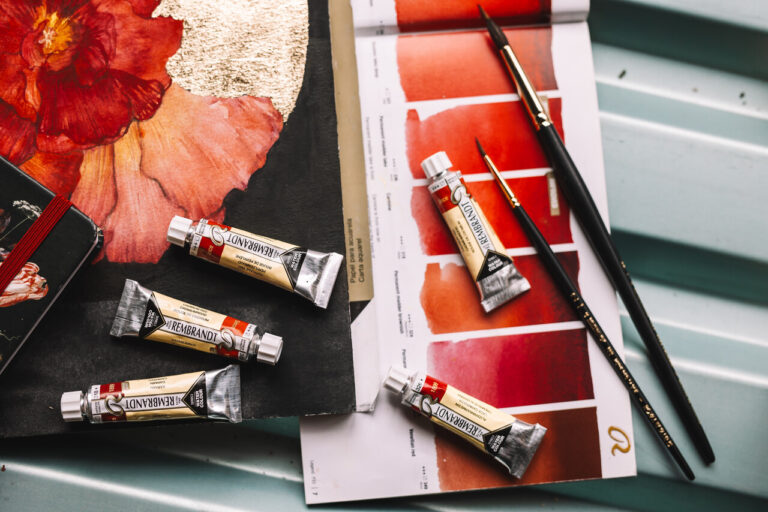
Van Gogh is clear and transparent with approximately 72 colors and is aimed at students and artists. Rembrandt is professional watercolor paint with highly concentrated pigment, 120 colors and bound with pure Arabic gum.
Read more: Which watercolor paint should I choose? Van Gogh, Rembrandt, Bruynzeel, Sakura or Ecoline
Napkins or tubes?
Napkins are dry and ready quickly, convenient for on-the-go use and for beginners. Tubes provide soft, concentrated paint for large areas and intense colors.
Read more: Which watercolor paint should I choose? Van Gogh, Rembrandt, Bruynzeel, Sakura or Ecoline
How many colors do I need?
A set of 12 to 24 colors is enough to learn to mix. With a warm and a cold blue, red and yellow, you are already far ahead.
Read more: Which watercolor paint should I choose? Van Gogh, Rembrandt, Bruynzeel, Sakura or Ecoline
What paper do I need?
Use real watercolor paper or an watercolor block. Just drawing paper will get wet with a lot of water. See Which paper do I choose?.
Read more: Which watercolor paint should I choose? Van Gogh, Rembrandt, Bruynzeel, Sakura or Ecoline
What does light marriage mean?
It indicates how long a color does not fade under museum conditions. +++ is at least 100 years, ++ is 25 to 100 years. This is stated per color for Rembrandt and Van Gogh.
Read more: Which watercolor paint should I choose? Van Gogh, Rembrandt, Bruynzeel, Sakura or Ecoline
What is metallic and interference watercolor paint?
These are colors with glitter or pearlescent pigments. They give a shine that you don’t get with ordinary pigments.
Read more: Which watercolor paint should I choose? Van Gogh, Rembrandt, Bruynzeel, Sakura or Ecoline
Ecoline, markers and ink
What is the difference between Ecoline and regular watercolor paint?
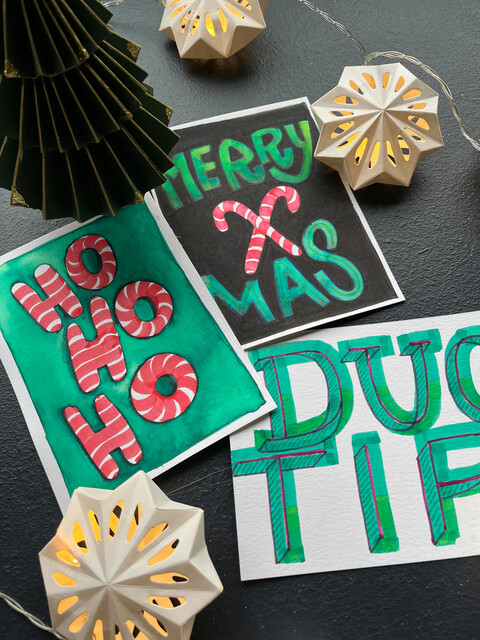
Ecoline is liquid watercolor in bottles and pens, very vibrant and convenient for illustration and hand lettering. Watercolor paint in small tubes or jars is more suitable for extensive mixing.
Read more: Ecoline, markers and ink: what is suitable for illustration and hand lettering?
Can I mix Ecoline?
Yes, you can mix colors and create pastel and glitter effects with white or gold.
Read more: Ecoline, markers and ink: what is suitable for illustration and hand lettering?
Which paper fits with Ecoline?
Royal Talens produces an Ecoline watercolor paper block of 24 × 32 cm with 12 sheets of 290 g/m², glued on one side so that the paper does not curl. It is suitable for liquid watercolor paint, Brush Pens and Duotip markers. You can also use other watercolor paper.
Read more: Ecoline, markers and ink: what is suitable for illustration and hand lettering?
Are his brush pens suitable for beginners?
Yes. They are ready for use immediately and are easy to handle for hand lettering.
Read more: Ecoline, markers and ink: what is suitable for illustration and hand lettering?
Is the lightfastness of Ecoline guaranteed?
Ecoline is made from dyes, so the lightfastness is lower than with pigment paint. It is primarily intended for illustration and use, not for work that will be exposed to daylight for years.
Read more: Ecoline, markers and ink: what is suitable for illustration and hand lettering?
Can I combine Ecoline with a printed design?
Yes, Royal Talens calls this a hybrid technique: you print a design and add details with Ecoline. First test whether the printer ink is water-resistant.
Read more: Ecoline, markers and ink: what is suitable for illustration and hand lettering?
Where is Ecoline used?
For illustration, journaling, color, calligraphy, handlettering, product and fashion design, and children's drawings.
Read more: Ecoline, markers and ink: what is suitable for illustration and hand lettering?
How many colors are there?
The liquid water paint has 60 colors, the Brush Pens have 60 colors and the Duotip markers have 32 colors.
Read more: Ecoline, markers and ink: what is suitable for illustration and hand lettering?
Mediums, varnish and gesso
Do I always need gesso?
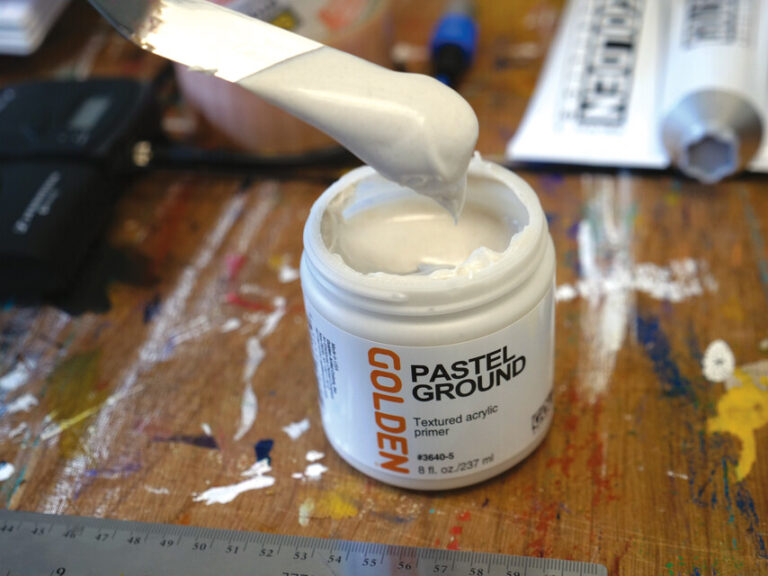
Not always on ready-made canvas, but on panel, wood and paper, gesso provides grip and a smooth surface.
What does an acrylic medium do?
It changes the thickness, gloss or drying time of acrylic paint without losing its strength. Water thins it, but can weaken the bond.
When do I varnish a painting?
Only when the paint is completely dry. With oil paint, that takes months; with acrylic, it’s much shorter.
Mat or glossy varnish?
That's taste. Matt gives a sense of calm; high-gloss deepens the colors. Silk gloss is in between.
Can I use oil and acrylic mediums interchangeably?
No. Use acrylic mediums for acrylic paint and oil paint mediums for oil paint.
What is a Cobra medium?
These are mediums that are suitable for water-soluble Cobra oil paint, so that the paint remains easy to dilute and clean with water.
Colors
How many colors do I need as a minimum?
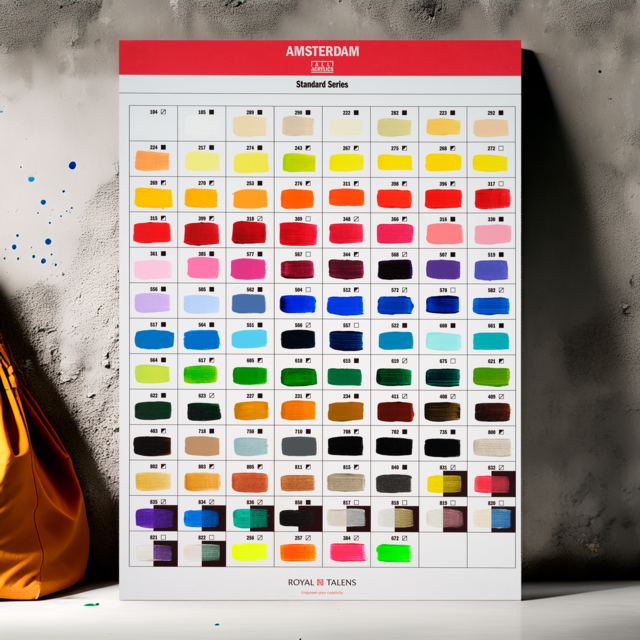
Six to eight: two green, two red, two blue and white. Black and earth colors are extra.
Read more: What colors do I need? Basic palette for acrylic, oil and watercolor
Why two types of each primary color?
A warm and cold example gives the range to mix pure secondary colors, such as green and purple.
Read more: What colors do I need? Basic palette for acrylic, oil and watercolor
Can I mix black myself?
Yes, but a tube of black is convenient and practical.
Read more: What colors do I need? Basic palette for acrylic, oil and watercolor
Is separate white space necessary?
Yes. With acrylic and oil, white is needed to make colors lighter.
Read more: What colors do I need? Basic palette for acrylic, oil and watercolor
How do I mix a good gray?
Mix a blue with an orange-brown tint or use black and white for neutral gray.
Read more: What colors do I need? Basic palette for acrylic, oil and watercolor

Substrates
Can I use oil paint on paper?
Only on paper intended for oil. Just paper absorbs the oil and becomes crumbly.
Read more: Substrates: canvas, panel or paper?
Cloth or panel?
The cloth is light and elastic, the panel is flat and stable. Choose according to your taste.
Read more: Substrates: canvas, panel or paper?
Why is my paper curling?
Thin paper absorbs moisture and curls. Use heavier watercolor paper or a watercolor block.
Read more: Substrates: canvas, panel or paper?
Do I need gesso on canvas?
Not usually on ready-made canvas, but on panel and untreated canvas.
Read more: Substrates: canvas, panel or paper?
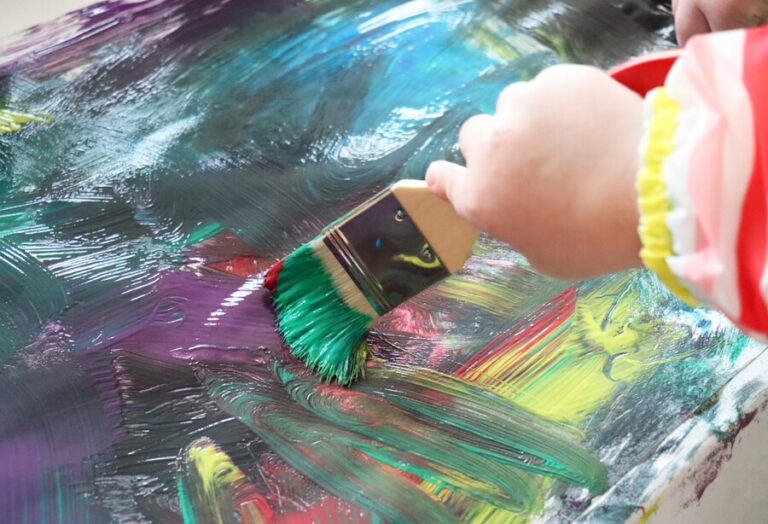
Painting with children and at school
Which paint is safe for children?
Always read the packaging and pay attention to the age recommendation. Water-based paints, such as acrylic paint and Ecoline, are common, but caution remains necessary.
Read more: Painting with children and at school: which paint do you choose?
How do I prevent stains?
Use rags, newspaper and rinse brushes with water and soap before the paint dries.
Read more: Painting with children and at school: which paint do you choose?
Which packaging is economical?
Large tubes, flasks or pots from 120 ml to 750 ml.
Read more: Painting with children and at school: which paint do you choose?
Can acrylic paint be used on clothing?
Dry acrylic paint is water-resistant and therefore almost impossible to remove from clothing. Rinse immediately with water and soap.
Read more: Painting with children and at school: which paint do you choose?
Ordering, shipping and returns
Do you also deliver in Belgium?
Ja, we leveren in heel België, Vlaanderen en Wallonië, onder dezelfde voorwaarden als in Nederland: gratis verzending vanaf €40, daaronder €5,95 verzendkosten. Voor 17:00 besteld is dezelfde dag verzonden; Belgische bestellingen zijn meestal binnen 1 tot 2 werkdagen in huis. Betalen kan met Bancontact, KBC, Belfius, iDEAL, PayPal, Apple Pay en Klarna.
How much does shipping cost?
Verzending naar Nederland en België is gratis vanaf €40. Onder de €40 rekenen we €5,95 inclusief btw. Afhalen in onze winkel aan de Dam 35 in Schiedam is altijd gratis.
When will my order be shipped?
If you order by 17:00 on a working day, we will ship it the same day. In the Netherlands, you usually receive your package the next day, in Belgium within 1 to 2 working days.
Can I pick up my order in the store?
Yes. When paying, choose Pickup at Dam 35, Schiedam. You won’t pay any shipping costs and your order will be ready for you the same day. View store opening hours.
Can I return something?
Je hebt 100 dagen bedenktijd na ontvangst. Meld je retour via de Return page; Unused products in the original packaging can be returned; the return costs are at your own expense.
Liever even overleggen?Kom langs in onze winkel aan de Dam 35 in Schiedam of bel 010-4260289. We denken graag met je mee.
Route and opening hours